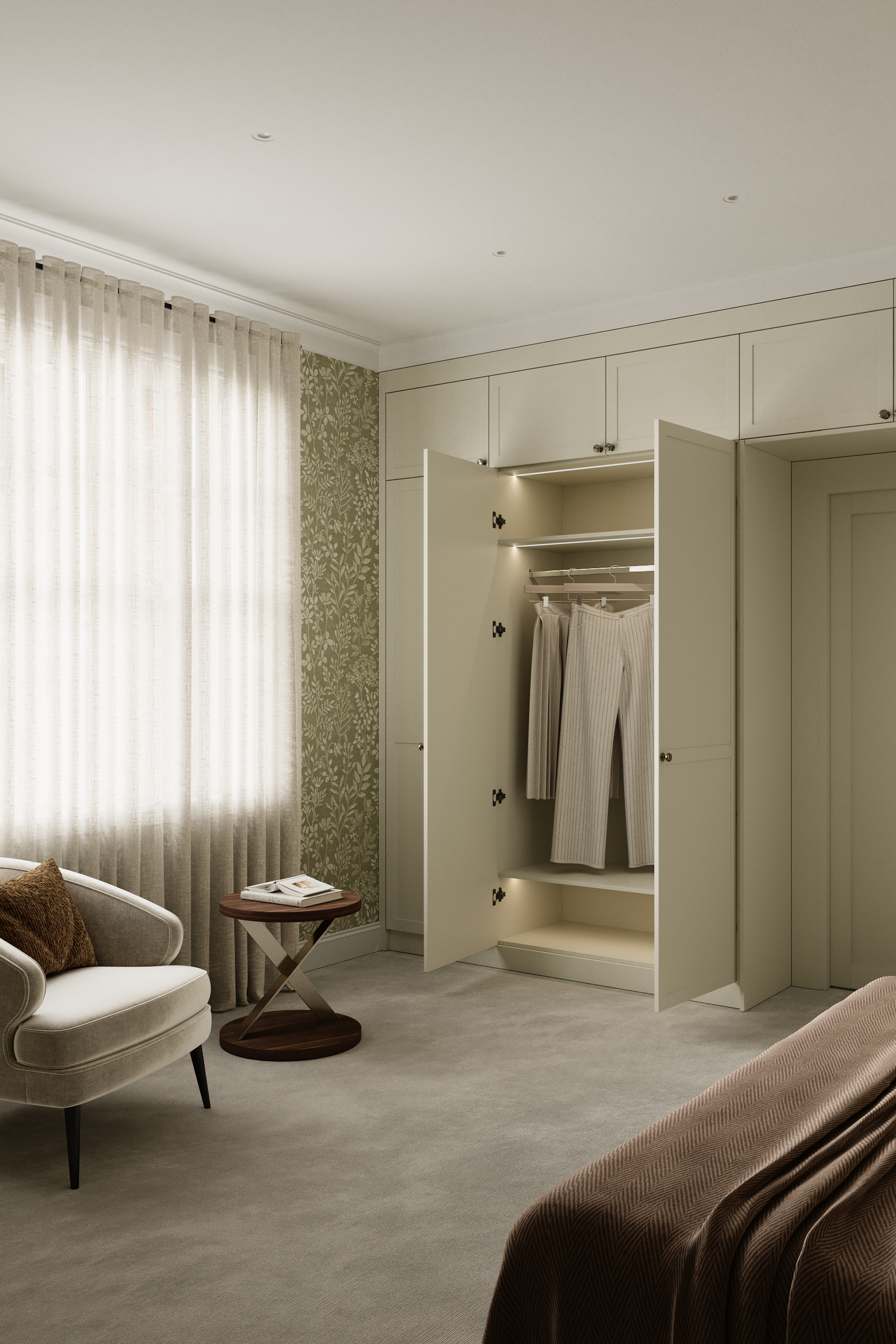
Wardrobes and dressing rooms: getting depth and internals right
22 March 2026 · Design
The most common regret is not the finish, it is discovering that full-length coats brush the skirting or that shoe shelves are too shallow for the pairs you actually wear.
Start with what you store
We list categories (long hang, double hang, folded, shoes, accessories) and assign realistic dimensions. Sliding systems, hinged doors, and walk-in corners each change how much depth you need at the sides and back.
Internals can evolve: we specify adjustable holes and spare panels where it helps, so seasonal changes do not mean a new carcass.
Drawer stacks and jewellery
Deep drawers for folded clothes need full-extension runners and sensible heights, too shallow and jumpers bulge; too deep and everything becomes a pile. Jewellery and watch trays sit better in shallow top drawers with dividers than in back corners of high shelves.
We discuss lighting inside wardrobes early: sensor-activated LED strips transform morning routines but need wired supplies and diffusers that do not cast harsh stripes across shirts.
Dressing rooms and couples
Shared dressing spaces work best when long hang and double hang are duplicated or clearly zoned so two people are not crossing paths at rush hour. A central island of drawers only fits when circulation around it stays generous; we model that in plan before anyone commits to a vanity size.
Planning a project?
Book a design visit to talk through layout, materials, and timeline with our team.
Related reading
- Living-room joinery: media walls without the clutterCables, soundbars, and consoles disappear when storage and ventilation are designed as one elevation. How we approach media joinery.
- Layered lighting: how we plan task, ambient, and accent in kitchensUnder-cabinet strips alone are not a lighting strategy. Here is how we coordinate fittings with joinery so the room works from breakfast to evening entertaining.
- Fitted wardrobe design ideas for every bedroomFrom door styles to colour choices and internal layout, here is how the design decisions on a fitted wardrobe actually play out once it is built.