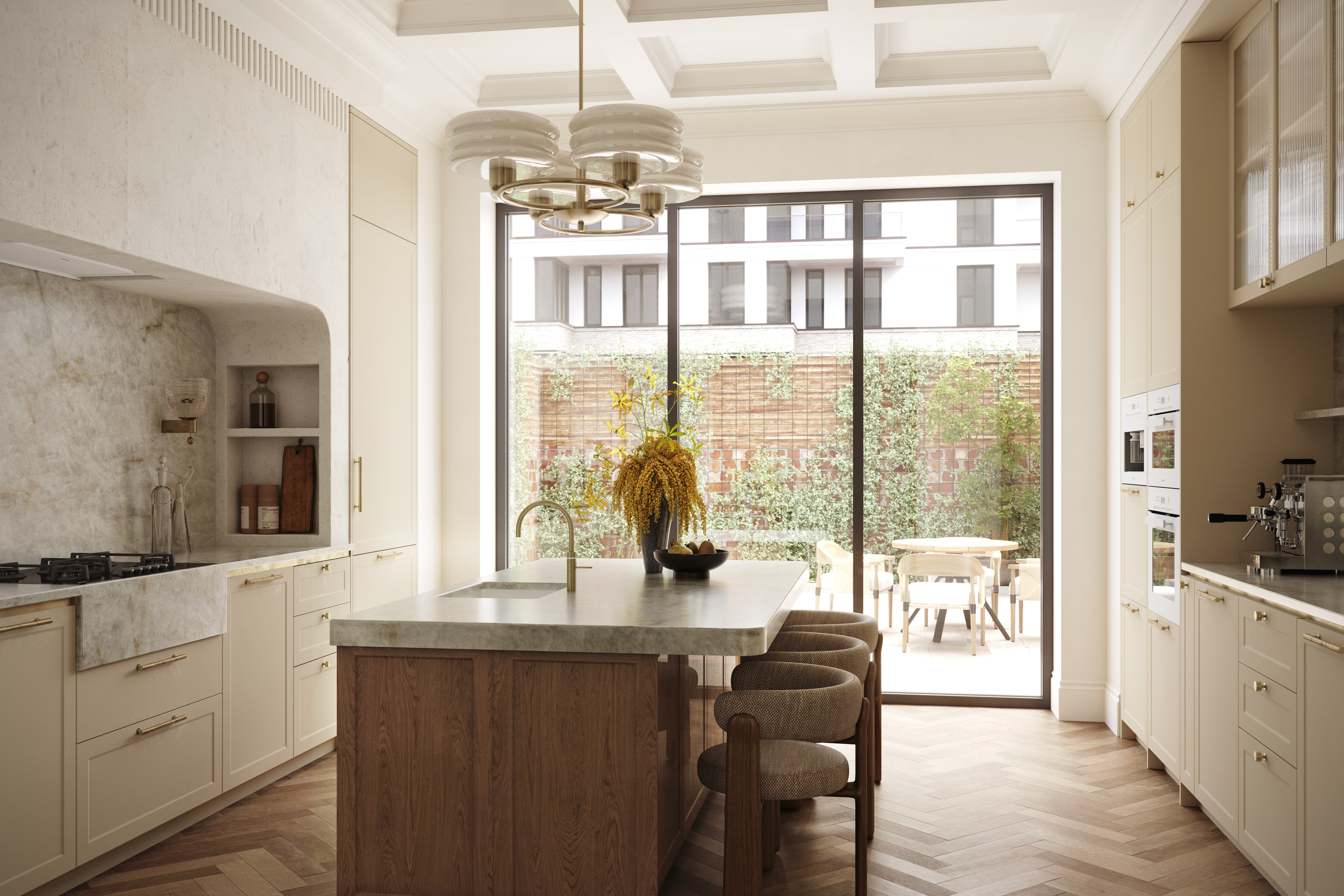
Island size, clearances, and how to avoid a cramped cook zone
5 March 2026 · Design
Clients often arrive with a photograph of a huge island from a room twice the size of theirs. Our job is to translate the idea into proportions that respect circulation, appliance doors, and seating overhang without blocking drawers.
Aisles and working edges
Comfortable passing space behind seated guests, dishwasher drop-down clearance, and fridge door swing are all drawn to scale, not guessed from a grid plan. If you want bar seating, we resolve legroom and services before the stone order.
When space is tight, a slim peninsula or a two-level island can deliver the same social function with less floor area.
Services through the island
Hobs, sinks, and pop-up sockets all need routes in the floor, not always possible in apartments with post-tensioned slabs or shallow voids. We confirm structural and MEP constraints before you fall in love with a hob-centre island that cannot be supplied or vented.
Overhang for seating typically needs support (steel brackets, concealed corbels, or a leg detail), coordinated with knee space and panel thickness so the stone or timber top does not feel springy when leaned on.
When the room is open-plan
Islands often face a sofa or dining table; the back elevation becomes as important as the kitchen side. We treat that face as architecture: balanced doors, pocket niches, or low storage that does not tower over seated guests.
Planning a project?
Book a design visit to talk through layout, materials, and timeline with our team.
Related reading
- Why bespoke joinery lasts longer than you expectFitted furniture fails in the details: carcass construction, adjustment, and finishing. Here is how bespoke work is built to stay true for years.
- Open shelving versus wall cabinets: striking a balanceShelves photograph beautifully; doors hide chaos. How we mix both so the kitchen stays practical after the shoot.
- Wardrobes and dressing rooms: getting depth and internals rightHanging lengths, shoe storage, and drawer stacks only work if the carcass depth and door type are decided together. A short guide to planning fitted wardrobes.